1/1


Share:
RayNeo GT Max the first AR smart glasses with Dolby Vision
(0)
0 Sold
£289.99


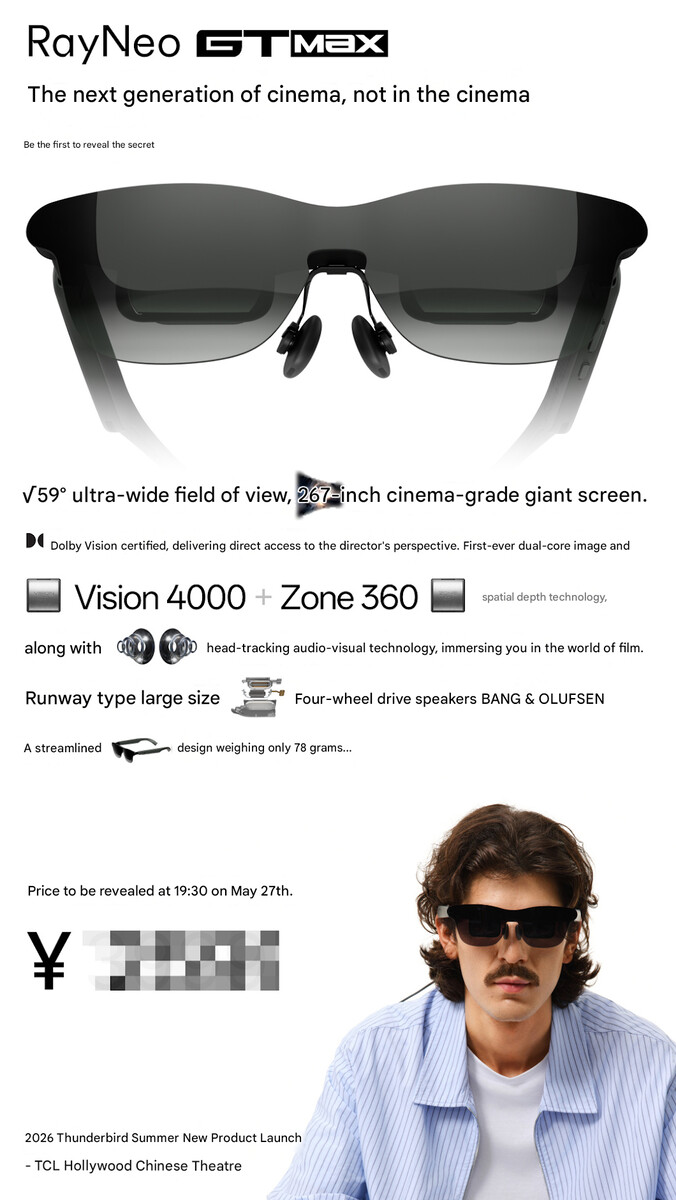
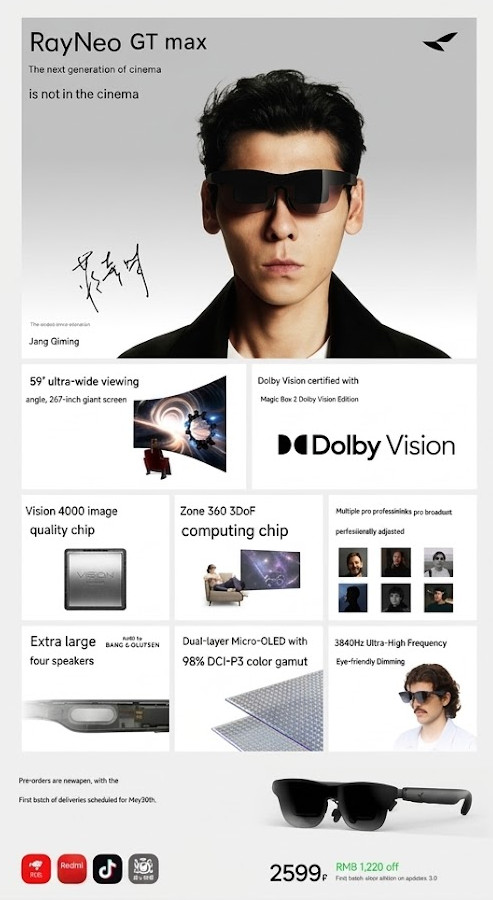
TCL-backed RayNeo has just announced its new flagship RayNeo GT series AR glasses. Headlined by the premium RayNeo GT Max, the lineup brings the widest field of view in consumer AR glasses, the first-ever Dolby Vision support, and a collaboration with Bang & Olufsen for spatial audio.
The magic number here is 59 degrees. That’s the GT Max’s field of view, and RayNeo says it’s one of the largest available in consumer-grade AR glasses right now.
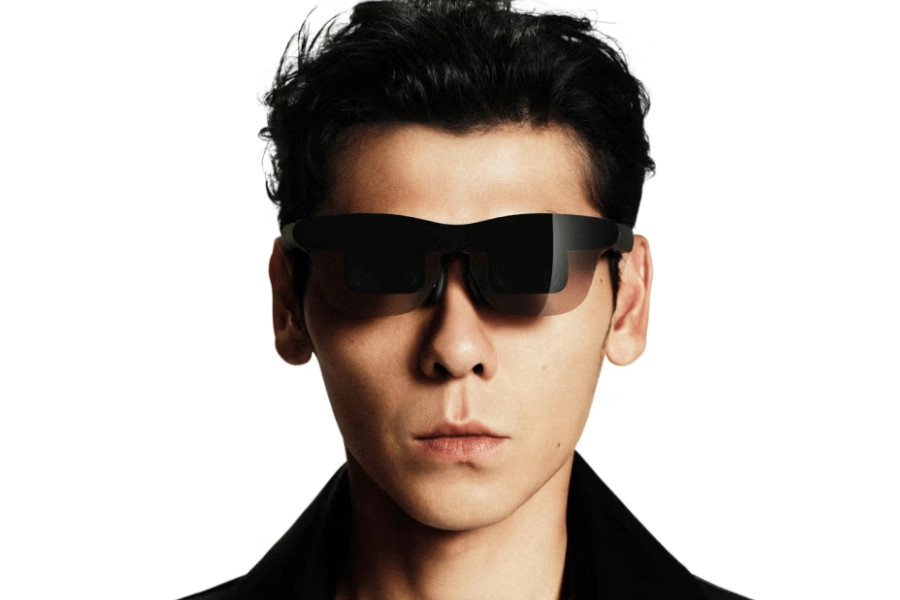
For comparison, most AR glasses sit at 45 degrees. RayNeo claims the jump translates to roughly 86% more display area. The company describes the experience as a “267-inch giant screen six meters away,” which puts it in the same conversation as an IMAX theater.
To pull that off, RayNeo built a new optical engine called the Peacock Optical Engine 3.0 Max. It uses a prism light module and multi-layer reflection technology, and somehow manages to cut overall thickness by 29% despite the complexity. Although RayNeo says manufacturing time for a single optical module jumped 60%, and costs more than doubled.
The display itself is a 5.5-generation Micro OLED panel with a dual-layer design for better brightness, color, and contrast. RayNeo worked with TCL’s picture quality lab to tune the image and has introduced a “Pure Cinema Mode” to preserve what creators originally intended rather than pumping up saturation.
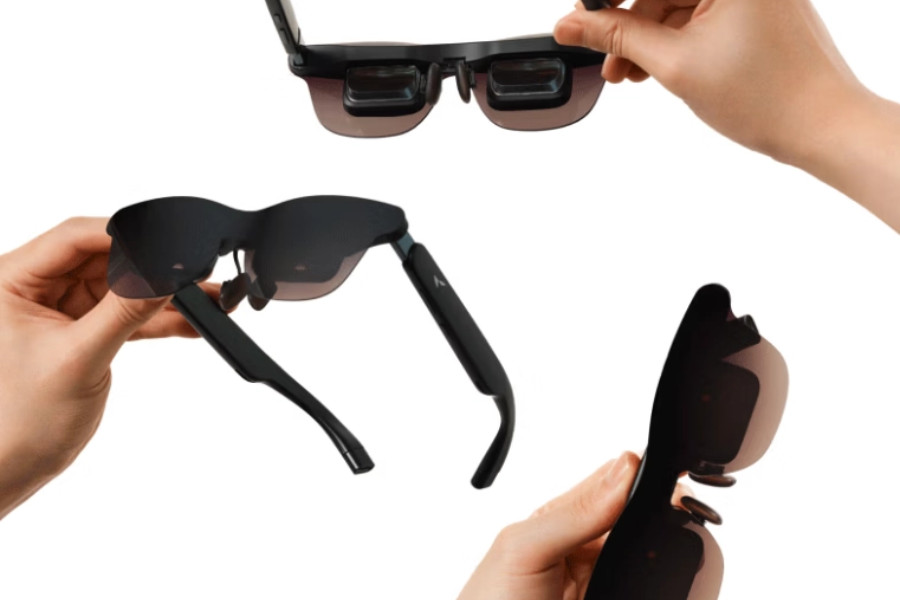
Then there’s the Dolby Vision partnership. The GT Max is, officially, the world’s first AR glasses to support Dolby Vision. You’ll need RayNeo’s new Magic Box 2 Dolby Vision Edition to play Dolby Vision content, but the pipeline is there. RayNeo has also locked in partnerships with Youku, Tencent Video, iQIYI, and Bilibili for content access.
Under the hood, the GT Max runs two dedicated chips: the Vision 4000 for image processing and the Zone 360 for spatial calculation. Together, they enable three display modes — follow mode, spatial fixation mode, and image stabilization — covering everything from watching movies on the couch to staying focused on a screen while riding a train.
Audio gets a serious upgrade, too. RayNeo fitted the GT Max with custom racetrack-shaped speakers, 38% larger than standard units, with a six-magnetic-circuit setup. Bang & Olufsen handles the tuning, and head-tracking spatial audio means the sound shifts with the image’s position in space.
At 78 grams, the GT Max is not the lightest thing you’ll put on your face, but RayNeo did spend six months trimming it down from an 89-gram prototype. It uses nylon, magnesium-aluminum alloy, and powder metallurgy hinges to keep things manageable. It also supports prescription lenses, up to 1000 degrees of myopia and 800 degrees of hyperopia, and comes in S, M, and L sizes.
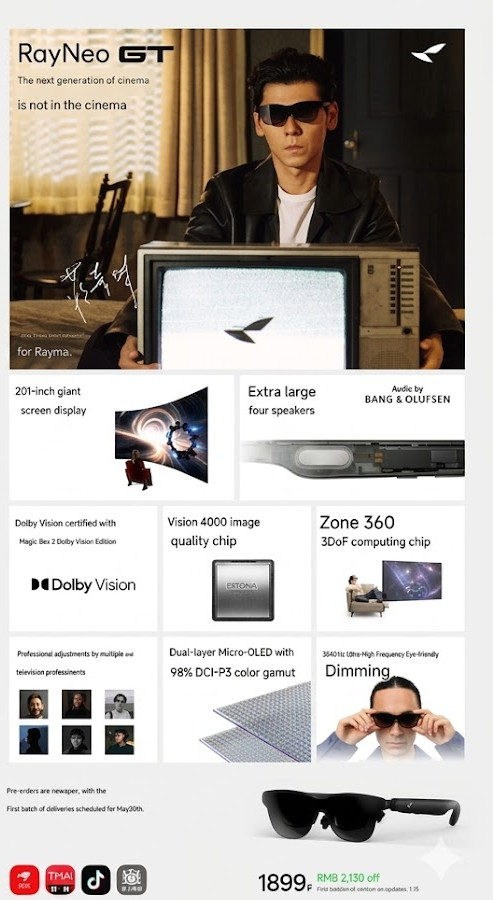
For those who don’t need the full flagship experience, RayNeo also launched the standard GT: a lighter 68-gram model with a 46-degree FOV that retains the dual-chip setup and spatial modes.
Beyond visuals, the GT Max delivers an equally impressive audio experience. Custom racetrack-shaped speakers, 38% larger than standard units, are expertly tuned by Bang & Olufsen. Coupled with head-tracking spatial audio, the sound dynamically shifts with the image's position, creating a truly all-encompassing sensory journey.
Underneath, dual dedicated chips-the Vision 4000 for image processing and Zone 360 for spatial calculation-enable versatile display modes, from movie watching to staying focused on a screen while in motion. Despite its advanced tech, the 78-gram GT Max supports prescription lenses and comes in multiple sizes, ensuring comfort. The more affordable standard GT model is also available for those seeking a lighter experience.